
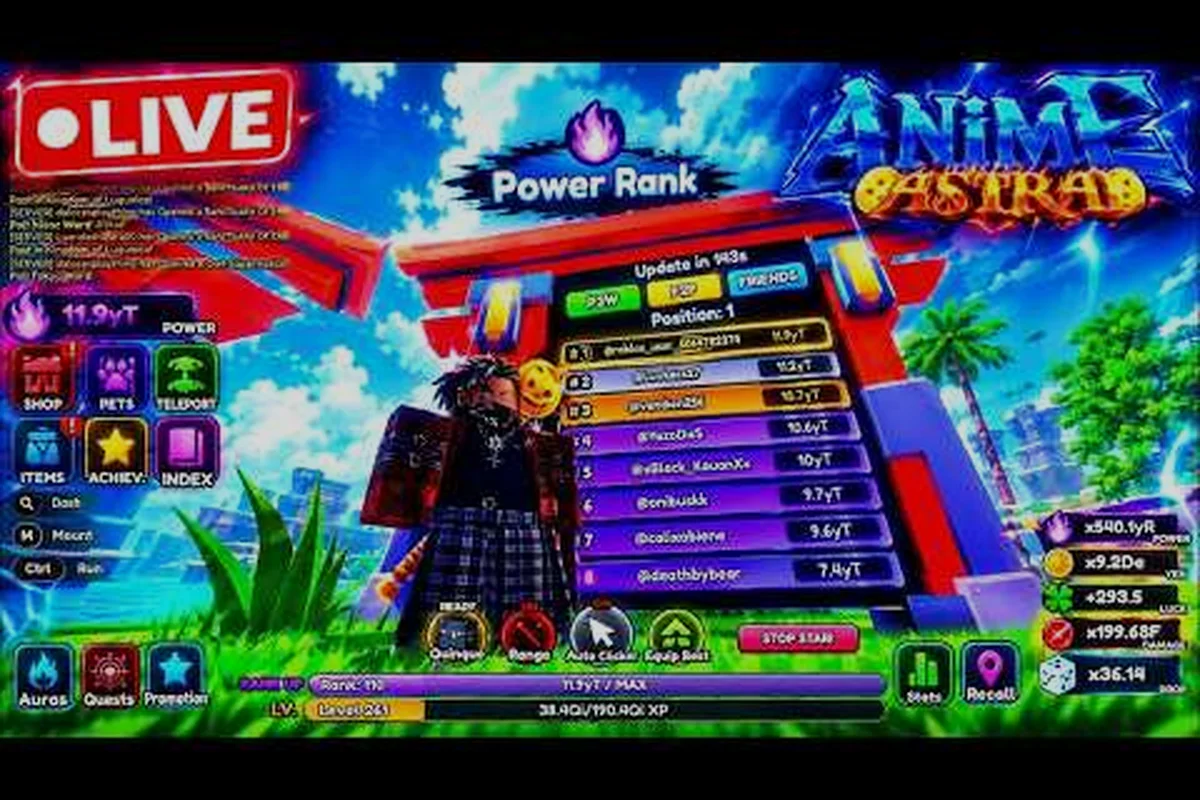
Cooperative play raids in Anime Astral Simulator reward squads that arrive prepared, not loud. World boss phases, leaderboard raids, and dungeon-style gauntlets all hand out shared drops, so the difference between a wasted attempt and a clean clear comes down to squad size, power gating, and knowing which world boss drops the loot your roster actually needs. This guide covers squad setup, matchmaking, and reward splits so your next run pays off fast.
Squad Sizing, Power Gating, and Matchmaking Rules
Anime Astral Simulator cooperative play raids cap lobby sizes based on encounter difficulty, and the cap directly shapes how the world boss splits its loot table. Solo players get the full personal reward pool, but multiplayer raids distribute drops per contribution tier, which means a balanced squad usually clears faster and walks away with more total loot than a single over-leveled player brute-forcing the encounter. According to the official Anime Astral Simulator game page, the title supports desktop and mobile co-op, and the community-tested raid cap sits at four players for standard world boss events and eight players for the rotating Raid Gauntlet events listed under the gamemode rotation.
Power gating is the second filter the lobby applies. Each raid assigns a recommended power threshold, and any squad member below the floor simply gets a participation reward instead of the actual world boss drops. Community data from repeated runs suggests the Normal World Boss floor is around the early-mid world power band, while the Hard World Boss floor jumps roughly 30-40% higher. Squads that ignore the gate spend their full timer on the encounter and walk away with only the consolation drop, which is the most common reason Anime Astral Simulator raids feel unrewarding.
Recommended Squad Sizes by Encounter Type
| Encounter | Squad Size | Power Floor | Avg Clear Time (community) | Best Loot Tier Reached |
|---|---|---|---|---|
| Normal World Boss | 2-4 | Early-mid band | 4-6 min | Tier I + Tier II accessories |
| Hard World Boss | 4 (full) | Late band | 7-9 min | Tier II + rare accessories |
| Raid Gauntlet (rotating) | 6-8 | Top band | 12-15 min | Tier III accessories + tickets |
| Dungeon-style Trials | 2-3 | Mid band | 5-7 min | Potion bundles + fighter XP |
| Leaderboard Race Raid | 4 (locked) | Top band | Variable | Points only, no gear drops |
Power Tier and Lobby Eligibility
| Power Tier | Eligible Raids | Typical Roster Note |
|---|---|---|
| Below Normal floor | Practice rooms, daily Trials | Cannot enter real world boss lobbies |
| Normal floor | Normal World Boss, Trials | Usually pairs with 1-2 carry players |
| Hard floor | Hard World Boss, Leaderboard Raids | Full squad, balanced roles |
| Top tier (post-update 14) | Raid Gauntlet, Leaderboard Race | Best squads, ticket-heavy rewards |
When matchmaking stalls because nobody in your friends list meets the floor, the fastest fix is to grind one or two dungeons runs first to push the squad's median power above the gate. A clean dungeon clear also unlocks the daily bonus that boosts world boss damage by a small margin for the next hour, which is enough to flip a failing squad into a passing one.
World Boss Drops, Loot Splits, and How the Reward Table Works
World boss drops in Anime Astral Simulator follow a contribution-weighted split, and the weighting is what most players misunderstand. Damage dealt is the primary contribution metric, but the system also tracks revive count, debuff uptime, and finishing blow. A squad where one player carries 80% of the damage while the others stand in safe zones will end the run with one full-tier reward and three participation drops, even though the carry is at full squad cap.
The reward table itself rotates by world tier, and each world boss has a fixed accessory pool attached. Players farming for the shoulder accessories that buff critical rate should target the corresponding world boss, not the daily Trial that grants potions. The Tier II accessory pool is the meaningful chase for mid-game squads, while the Tier III pool only opens during the rotating Raid Gauntlet and inside the highest world tier.
Loot Split Rules by Squad Size
| Squad Size | Top Contributor | Mid Contributors | Lowest Contributor | Pool Behavior |
|---|---|---|---|---|
| 2 players | Full tier drop | Participation drop | — | One full + one consolation |
| 3 players | Full tier drop | One mid-tier roll | Participation drop | Weighted table |
| 4 players | Full tier drop | Two mid-tier rolls | Participation drop | Standard world boss table |
| 6-8 (Gauntlet) | Full tier + bonus ticket | Three mid-tier rolls | Two participation drops | Extended table with raid-exclusive items |
World Boss to Accessory Mapping
| World Boss | World Tier | Notable Accessory Pool | Best Use Case |
|---|---|---|---|
| Crimson Oni (early) | World 1-2 | Tier I damage accessories | Early progression, before power gate |
| Frostfang Serpent | World 3-4 | Tier I crit rate + shoulder | Mid-game crit stacking |
| Storm Titan | World 5-6 | Tier II damage + elemental | Pre-gauntlet gearing |
| Void Monarch | World 7-8 | Tier II shoulder accessories | Leaderboard raid entry requirement |
| Astral Sovereign (Gauntlet) | World 9+ | Tier III accessories + tickets | Endgame chase, squad-only |
The split system rewards squads that play the encounter together rather than queuing in and zoning out. Squads that coordinate a damage rotation, with each player taking a phase and applying debuffs on cooldown, regularly report full-tier drops for every member, even at the four-player cap. Players grinding the world boss drops for a specific accessory should check the community-maintained drop tables before queueing, because the pool is fixed per boss and rotating to a different world wastes the run.
Leaderboard Raids and Competitive Squad Play
Leaderboard raids are the competitive layer of cooperative play, and the ruleset shifts slightly from the standard world boss format. Damage is still the main contribution metric, but cleared-within-timer is a hard requirement: a squad that kills the world boss after the timer expires scores zero points regardless of how clean the clear looked. This is why Anime Astral Simulator leaderboard raids tend to favor full four-player squads running pre-planned compositions rather than mixed-tier pickup groups.
The leaderboard reset is weekly, and points are weighted by encounter difficulty plus squad size efficiency. A two-player squad that clears the Hard World Boss in under five minutes scores more per player than a four-player squad that takes nine minutes, because the efficiency multiplier rewards speed. Top leaderboard squads coordinate voice chat, pre-buff with potions from the Anime Astral Simulator beginner guide, and slot one designated revive player so the damage dealers never break rotation.
Leaderboard Scoring Weight by Squad Size
| Squad Size | Damage Multiplier | Speed Multiplier | Total Efficiency Score |
|---|---|---|---|
| 2 players | 1.0x | 1.4x | 1.4x |
| 3 players | 1.1x | 1.2x | 1.32x |
| 4 players | 1.2x | 1.0x | 1.2x |
| 6+ (Gauntlet) | 1.3x | 0.85x | 1.10x |
Competitive Composition by Role
| Role | Squad Slots | Main Job | Key Stat to Stack |
|---|---|---|---|
| Damage Dealer | 2 | Phase damage, debuff uptime | Power + crit rate |
| Tank / Revive | 1 | Aggro hold, teammate revive | HP + revive cooldown reduction |
| Support / Debuff | 1 | Buff cycling, debuff application | Buff duration + debuff potency |
Squads targeting a leaderboard raid finish should build at least one dedicated support, because debuff uptime scales the entire squad's damage and is the single biggest multiplier on the scorecard. Players who want to compare their roster against the meta before queueing can cross-check against the Anime Astral Simulator raid team composition breakdown to see which roles their current fighter set actually fills.
Dungeons, Trials, and the Daily Rotation Loop
Dungeons and Trials are the lower-stakes cooperative modes that feed into raid readiness. A clean dungeon run grants a small power spike, the daily bonus buff, and a chunk of fighter XP that pushes the squad's median power above the world boss gate. The rotation cycles every few hours, and the schedule is listed in the in-game gamemode panel, with the community-maintained reference at the Anime Astral Simulator gamemode schedule tracker page confirming the same Trials, Gates, Raids, and Defense blocks.
Trials are the best entry point for squads that have never queued a world boss together, because the encounter is short, the contribution weighting is more forgiving, and the consolation drop is still a useful potion bundle. Gates sit one tier above Trials and unlock a few of the mid-tier accessories that bridge into world boss gearing. Raids is the umbrella term for the cooperative world boss content, and Defense is the wave-based mode that tests squad sustain rather than burst.
Daily Rotation Content Tiers
| Mode | Squad Size | Reward Profile | Feeds Into |
|---|---|---|---|
| Trials | 1-3 | Potion bundles, small XP | Power gate warmup |
| Gates | 2-4 | Mid-tier accessories, XP | World boss gearing |
| Raids (World Boss) | 2-4 | World boss drops, accessories | Leaderboard entry |
| Defense | 3-4 | Wave tickets, sustain loot | Squad practice, daily bonus |
Pre-Raid Prep Checklist
| Step | Action | Time Cost | Power Impact |
|---|---|---|---|
| 1 | Run one daily Trial | 5 min | Small XP, daily bonus unlock |
| 2 | Activate the daily damage buff | 1 min | +small% damage for 1 hour |
| 3 | Stack two damage potions | 1 min | +flat damage for next run |
| 4 | Check the world boss power gate | 2 min | Confirm squad eligibility |
| 5 | Queue the world boss as a full squad | 1 min | Lock in the contribution split |
Players who skip the daily rotation loop and jump straight into a world boss tend to under-perform because they are missing the small flat-damage buffs that decide the last 5% of the timer. The prep loop also doubles as a gate check, because if the squad cannot clear the Trial under the timer, they are very unlikely to clear the corresponding world boss on the first attempt.
Common Failure Modes and How to Fix Them
Most failed cooperative play raids fall into one of five repeatable patterns, and each has a direct fix that does not require re-rolling the roster. The first is the mismatched power floor, where one squad member sits below the gate and quietly caps the contribution split. The second is the lone carry problem, where the strongest player tries to solo phases and leaves the rest of the squad with participation drops. The third is the rotation break, usually a missed revive that costs the squad a damage dealer mid-phase. The fourth is the wrong boss for the chase, where the squad queues a world boss whose accessory pool does not contain the item the team actually needs. The fifth is the timer panic, where the squad overcommits to burst damage and runs out of potions before the final phase.
Failure Pattern to Fix Mapping
| Failure Pattern | Symptom | Fastest Fix |
|---|---|---|
| Mismatched power floor | One player gets participation drop only | Swap that player for a Trial grind first |
| Lone carry | Only the carry gets full-tier loot | Force a damage rotation, even with weaker players |
| Rotation break | Squad wipes at 60-70% HP | Slot a dedicated revive player, drop a damage dealer if needed |
| Wrong boss for chase | Cleared the run, wrong accessory dropped | Cross-check the world boss to accessory map before queueing |
| Timer panic | Potions gone, boss at 20% HP | Save one potion rotation for the final phase, do not pre-burn |
Players who notice a run of participation drops despite a clean clear should look at the contribution log, not the loot screen, because the contribution breakdown is the only signal that tells them which squad member is silently under-performing. This is also where a quick reference like the Anime Astral Simulator accessories guide helps, because it confirms which accessories actually drop from each world boss and which require the harder raids.
For squads aiming at the weekly leaderboard, the single biggest gain comes from running the same four-player composition for two to three full resets and learning the phase timing together. Squads that swap members every run usually stay stuck in the mid-band because the rotation never stabilizes, and the leaderboard efficiency score punishes that instability. A locked roster, even a mid-tier one, reliably out-scores a stronger mixed group over a full week.
Frequently Asked Questions
How many players are needed for cooperative play raids in Anime Astral Simulator?
The standard cap is four players for world boss raids, and the rotating Raid Gauntlet opens to six to eight players. Two-player squads can clear Normal World Boss encounters, but the loot split is thinner and the contribution weighting is harsher on a smaller roster, so four players is the comfortable default.
What is the power floor for Hard World Boss raids?
Community data places the Hard World Boss floor at roughly 30-40% above the Normal floor, which puts most squads into the late world power band. Players below the floor still queue in, but receive only a participation drop instead of the world boss drops the squad actually earned.
Do leaderboard raids drop gear or just points?
Leaderboard raids score points only. The reward at the end of the weekly reset is a leaderboard rank and the cosmetic or ticket bundle attached to that rank. Actual gear drops come from the standard world boss runs and the rotating Raid Gauntlet, not the leaderboard race itself.
How does the world boss loot split work between squad members?
The split is contribution-weighted, with damage dealt as the primary metric and revive count, debuff uptime, and finishing blow as secondary. A squad that shares phases evenly will usually see every member take home a full-tier drop, while a squad with one dominant carry will see one full-tier drop and three consolation rolls.
Can a solo player clear a world boss without a squad?
Yes, but only the Normal World Boss at lower world tiers, and only with the right accessory and potion stack. Hard World Boss encounters are gated against solo clears in most community reports, and the solo clear timer rarely beats a coordinated four-player run, so the loot-per-minute math favors a squad even for solo-capable players.